
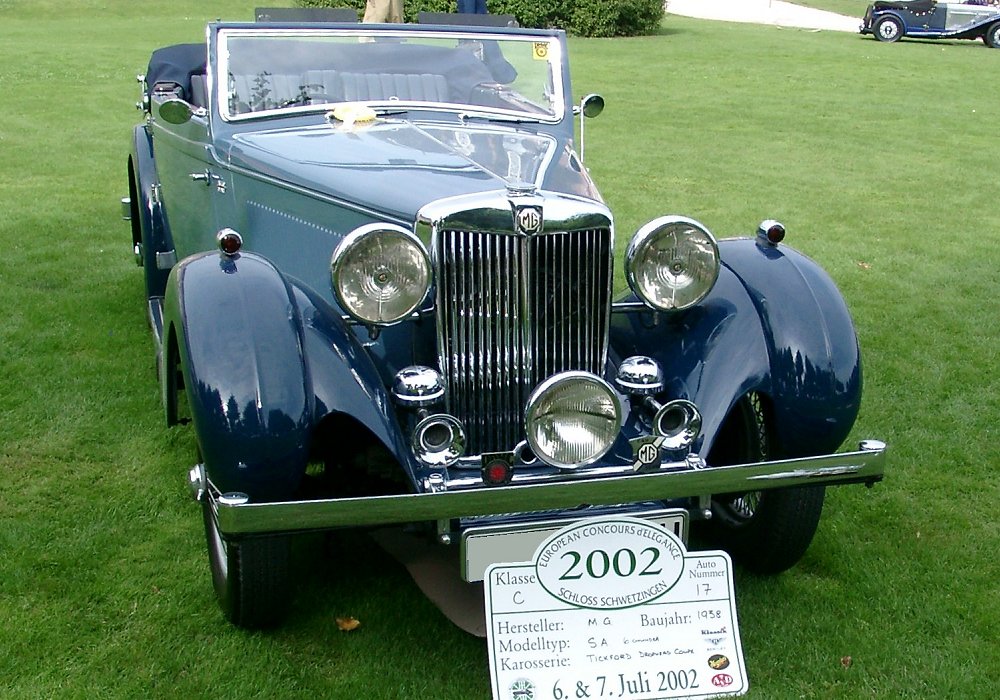
The MG SA Tickford Drophead Coupé was one of the most elegant and luxurious models produced by the MG Car Company during the 1930s. Introduced in 1936 as part of the prestigious SA range, the Tickford Drophead Coupé combined the smooth performance of a six-cylinder engine with sophisticated coachwork and the versatility of a convertible roof. Designed for motorists seeking the refinement of a luxury saloon alongside the enjoyment of open-air driving, it represented a significant departure from the lightweight sports cars for which MG had become famous.
The MG SA range was developed during a period when the company was seeking to expand its position within the British motor industry. Following its integration into the Nuffield Organisation, MG increasingly used established mechanical components from other manufacturers within the group while concentrating on producing distinctive sporting vehicles. The SA was introduced as the company’s flagship model, intended to compete with the larger sporting saloons and touring cars offered by manufacturers such as Alvis, Riley and SS Cars.
The Tickford Drophead Coupé was produced with specialist coachwork by Salmons & Sons of Newport Pagnell, a company renowned for its high-quality convertible bodies. Tickford was the name associated with the firm’s distinctive patented hood mechanism, which allowed a vehicle to be converted between enclosed and open configurations. The design provided considerably greater flexibility than the simple folding fabric hoods used on conventional roadsters and tourers.
The Tickford body was particularly attractive because it offered several configurations for different weather conditions. With the roof fully raised, the car provided the appearance and protection of a conventional enclosed coupé. The hood could also be partially opened, allowing occupants to enjoy fresh air while retaining some protection from the elements. When fully lowered, the vehicle became an elegant open touring car, combining the benefits of a convertible with the comfort expected of a prestigious British motor car.
Power was supplied by an inline six-cylinder engine featuring overhead valves operated by pushrods and twin SU carburettors. Early MG SA models were equipped with a 2,062 cc engine derived from Wolseley engineering, which was subsequently enlarged to 2,288 cc during production. The revised engine offered improved torque and flexibility, making it particularly suitable for the relatively substantial Tickford body. Producing approximately 75 horsepower in its original form, the SA engine provided respectable performance for a luxury sporting car of the period.
The six-cylinder engine delivered smooth and progressive power, allowing the car to cruise comfortably at sustained road speeds. Its relatively flexible torque characteristics reduced the need for frequent gear changes, while the twin carburettor arrangement contributed to responsive acceleration. Although the Tickford Drophead Coupé was heavier than MG’s smaller sports cars, it offered sufficient performance for confident touring and maintained the sporting character associated with the marque.
Power was transmitted to the rear wheels through a four-speed manual gearbox incorporating synchromesh on the upper ratios. The transmission was designed to complement the engine’s smooth power delivery, providing relatively easy operation for a vehicle of the period. Maximum speed was approximately 80 mph (129 km/h), depending on engine specification, body weight and road conditions. The car was intended primarily for comfortable high-speed touring rather than outright competition performance.
The chassis employed a substantial ladder-frame construction, designed to support the large body and provide the structural strength required for open coachwork. Suspension consisted of rigid front and rear axles supported by semi-elliptic leaf springs, with hydraulic shock absorbers controlling movement. Hydraulic drum brakes provided stopping power, offering improved consistency compared with the mechanically operated systems used on many earlier British vehicles.
The long wheelbase contributed to the Tickford’s stable road behaviour and comfortable ride. Although the suspension was conventional, it was well suited to the vehicle’s intended role as a refined sporting tourer. The relatively substantial chassis helped minimise body movement and provided a solid foundation for the elaborate convertible roof mechanism.
Externally, the MG SA Tickford Drophead Coupé was distinguished by its elegant proportions and carefully detailed coachwork. The long bonnet, prominent upright MG radiator grille and sweeping front wings created a dignified appearance, while large chrome headlamps and wire-spoked wheels reinforced its traditional British character. The flowing body panels and carefully integrated convertible roof gave the car a more sophisticated silhouette than the standard open tourer.
The Tickford roof mechanism was the defining feature of the model. Its construction incorporated a substantial folding framework and carefully fitted weatherproof covering, allowing the roof to be raised or lowered in stages. When closed, the hood provided a relatively secure and comfortable passenger environment, while the fully open configuration transformed the car into a stylish four-seat convertible.
The bodywork was complemented by high-quality exterior fittings, including chrome trim, substantial door handles and carefully finished glazing. The relatively long rear body accommodated the folded hood and luggage space, while the flowing wings and running boards contributed to the car’s elegant appearance. The overall design reflected the craftsmanship associated with specialist British coachbuilders during the interwar period.
Inside, the Tickford Drophead Coupé offered a level of luxury considerably greater than that found in MG’s smaller sports cars. The cabin featured leather upholstery, polished wood trim and carefully finished interior panels. The dashboard incorporated traditional instruments, including a speedometer, engine gauges and other controls, arranged within an attractive wooden fascia.
The front seats provided comfortable accommodation for the driver and passenger, while the rear compartment offered additional seating suitable for touring. The enclosed roof configuration improved protection from wind and rain, making the car practical for longer journeys and variable British weather conditions. The combination of traditional craftsmanship and convertible versatility contributed significantly to the Tickford’s appeal.
The driving experience was characterised by smooth six-cylinder performance, stable handling and a relatively comfortable ride. The long wheelbase and substantial body provided a composed touring character, while the engine’s flexible power delivery made the car enjoyable on open roads. Although it lacked the agility of MG’s smaller Midget models, the Tickford offered a more refined interpretation of sporting motoring, with greater emphasis on comfort and elegance.
The MG SA Tickford Drophead Coupé occupied a distinctive position within the British luxury car market. Its principal competitors included sporting drophead models from Alvis, Riley and SS Cars, all of which appealed to motorists seeking a combination of prestige, performance and open-air driving. MG’s offering was particularly attractive because it combined established mechanical engineering with specialist coachwork and the versatility of the Tickford roof.
Production of the MG SA range continued until 1939, when the outbreak of the Second World War brought civilian car manufacturing to a halt. Approximately 2,738 SA models were produced across the saloon, tourer and Tickford Drophead Coupé configurations. The Tickford represented a relatively small proportion of total production, making it considerably rarer than the standard saloon.
The introduction of the larger MG WA in 1938 demonstrated the company’s continued ambition to compete in the prestigious sporting-car market. However, wartime disruption brought an end to MG’s development of large luxury vehicles, and the company subsequently concentrated on smaller sports cars and family saloons. As a result, the SA Tickford remains a representative of a relatively brief but ambitious period in MG’s history.
Today, the MG SA Tickford Drophead Coupé is highly regarded among collectors of pre-war British luxury and sporting cars. Its elegant coachwork, sophisticated convertible roof and smooth six-cylinder engine make it one of the most desirable variations of the SA range. Surviving examples are relatively uncommon, and well-preserved or accurately restored cars are particularly valued for their originality and historical significance.
Restoration of a Tickford Drophead Coupé can be demanding because of the complexity of its coachwork and folding roof mechanism. The condition of the wooden body framework, hood structure, exterior panels and interior trim is particularly important. Replacement components can be difficult to obtain, and accurate restoration often requires specialist coachbuilding skills. Maintaining the original roof operation and period-correct detailing contributes significantly to the authenticity and value of surviving examples.
The MG SA Tickford Drophead Coupé represents one of the finest expressions of MG’s pre-war luxury-car ambitions. By combining a refined six-cylinder engine, elegant specialist coachwork and an innovative convertible roof, it offered a distinctive blend of sporting character and traditional British craftsmanship. Although produced in relatively small numbers, the Tickford Drophead Coupé remains an important and highly desirable model in MG history, illustrating the company’s ability to create sophisticated touring cars alongside its celebrated lightweight sports machines.