
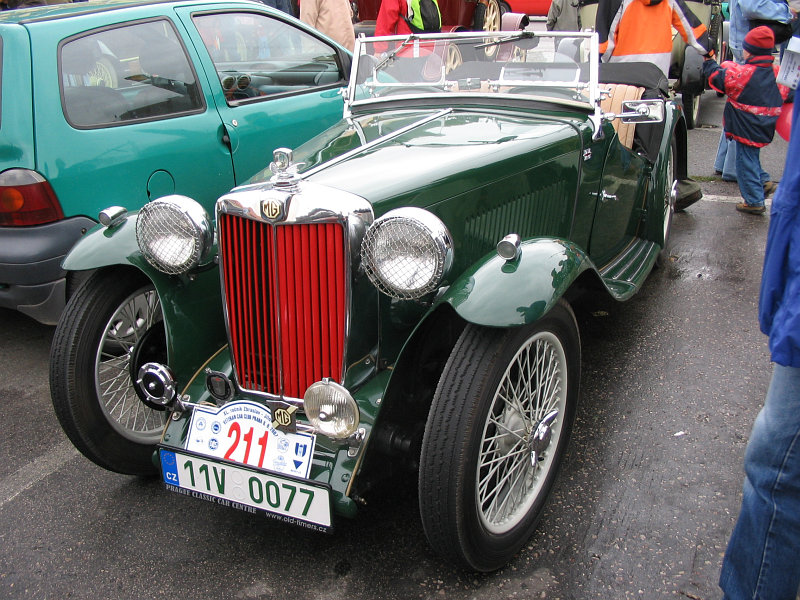
The MG TA Midget was introduced in 1936 as the successor to the MG PB Midget, marking the beginning of the famous MG T-type series. Manufactured at the MG factory in Abingdon, Oxfordshire, the TA represented a significant development in the company’s approach to producing affordable British sports cars. With a larger engine, more spacious bodywork and improved mechanical components, the TA was designed to appeal to a broader range of motorists while preserving the lively performance and distinctive styling associated with the MG marque.
The introduction of the TA followed a period of considerable change within MG. Under the ownership of the Nuffield Organisation, the company increasingly adopted mechanical components shared with other Morris vehicles. This approach reduced manufacturing costs, simplified servicing and helped make MG sports cars more accessible. Although the TA departed from the sophisticated overhead-camshaft engines used in earlier Midget models, it offered improved practicality and greater flexibility for everyday driving.
Power was supplied by a 1,292 cc inline four-cylinder engine derived from the Morris Ten. The engine featured overhead valves operated by pushrods, replacing the overhead-camshaft arrangement previously associated with MG’s smaller sports cars. Equipped with twin SU carburettors, it developed approximately 50 horsepower at 4,500 rpm. While its design was relatively conventional, the engine offered useful torque and dependable performance, making it well suited to both enthusiastic driving and longer journeys.
A four-speed manual gearbox transmitted power to the rear wheels, with synchromesh on the upper three ratios. This represented an improvement in convenience over earlier MG transmissions, allowing smoother gear changes during normal driving. The TA was capable of reaching approximately 78 mph (126 km/h), although actual performance varied according to body style, mechanical condition and road conditions. Its relatively modest weight and responsive engine provided enjoyable acceleration, while the direct mechanical controls contributed to the engaging driving experience expected of a pre-war MG.
The TA employed a traditional ladder-frame chassis, with rigid front and rear axles supported by semi-elliptic leaf springs. Hydraulic shock absorbers helped control suspension movement, providing improved ride characteristics compared with some earlier models. A particularly important development was the adoption of hydraulically operated drum brakes, replacing the mechanically operated braking systems used on previous Midgets. This arrangement provided more consistent braking and contributed to the car’s improved road manners.
The chassis was larger than that of the preceding PB Midget, with a wheelbase of approximately 94 inches (2,388 mm). The wider track and increased body dimensions allowed MG to provide more generous passenger accommodation without sacrificing the compact proportions of a traditional sports car. Although the suspension remained relatively firm and the steering required considerable driver involvement, the TA offered improved stability and comfort compared with its smaller predecessors.
The MG TA Midget was most commonly supplied as an open two-seat sports car, featuring the characteristic long bonnet, upright radiator grille, separate chrome headlamps and sweeping wings. Its flowing bodywork combined traditional British styling with practical details such as running boards, wire-spoked wheels and a rear-mounted spare wheel. The folding fabric hood and detachable side screens provided basic weather protection, allowing the car to be used throughout much of the year.
In addition to the standard open two-seater, the TA chassis was used for several alternative body styles. The Tickford Drophead Coupé, produced with coachwork by Salmons & Sons, offered a more luxurious interpretation of the T-type design, featuring improved weather protection and a more refined interior. The Airline Coupé was another distinctive variation, incorporating streamlined enclosed bodywork. These specialised versions demonstrated the adaptability of the TA chassis and appealed to buyers seeking greater comfort or more individual styling.
Inside, the standard TA featured a simple but attractive cockpit with leather-trimmed seating and a traditional dashboard. The instruments included a speedometer, tachometer, oil-pressure gauge and other essential controls. The large steering wheel, floor-mounted gear lever and relatively upright driving position reflected contemporary sports car design. Although interior space remained limited by modern standards, the TA provided noticeably more room than the earlier P-type Midgets.
The driving experience was characterised by direct steering, a firm ride and the distinctive sound of the four-cylinder engine. With little insulation from wind, road noise or mechanical vibration, the TA demanded greater involvement from its driver than a conventional saloon car. These characteristics were central to its appeal, providing a strong sense of connection between the driver, the vehicle and the road.
The TA quickly established itself as a popular choice among British sporting motorists. Its combination of affordability, relatively straightforward maintenance and lively performance made it suitable for club competition, trials, hill climbs and rallies. Many privately owned examples were modified for competition use, with improvements to engine tuning, suspension settings and bodywork. Although the TA was primarily intended as a road car, its sporting capabilities helped maintain MG’s reputation in amateur motorsport.
The model also contributed to MG’s growing international presence. Export sales introduced the TA to enthusiasts outside Britain, where its traditional styling and engaging performance attracted attention. Its relatively simple mechanical construction made it practical to maintain, while its compact dimensions and sporting character distinguished it from larger touring cars.
Production continued until 1939, when the TA was replaced by the MG TB Midget. A total of approximately 3,003 examples were manufactured during its three-year production period. The TB retained the general appearance and chassis layout of the TA but introduced the more advanced 1,250 cc XPAG engine, which subsequently powered several of MG’s most celebrated post-war sports cars.
The importance of the TA extends well beyond its relatively short production life. It established the styling and engineering foundations of the T-type series, which continued through the TB, TC, TD and TF models. These later cars played a major role in popularising British sports cars internationally, particularly in the United States following the Second World War.
Today, the MG TA Midget is regarded as an important and desirable pre-war British sports car. Surviving examples are valued for their traditional appearance, historical significance and engaging mechanical character. Restoration often requires careful attention to the wooden body framework, steel panels, chassis condition and original mechanical components. Well-maintained examples remain capable of enjoyable touring and are frequently seen at historic motoring events, classic car rallies and MG club gatherings.
The MG TA Midget represents a turning point in the development of the MG marque. By combining established mechanical components with attractive sports car styling and improved practicality, MG created a successful model that appealed to both enthusiastic drivers and everyday motorists. Its introduction marked the transition from the earlier overhead-camshaft Midgets to the more accessible T-type sports cars, establishing a design philosophy that would define MG for almost two decades. The TA remains an enduring symbol of pre-war British sports motoring and an important chapter in the history of one of Britain’s most celebrated sports car manufacturers.