
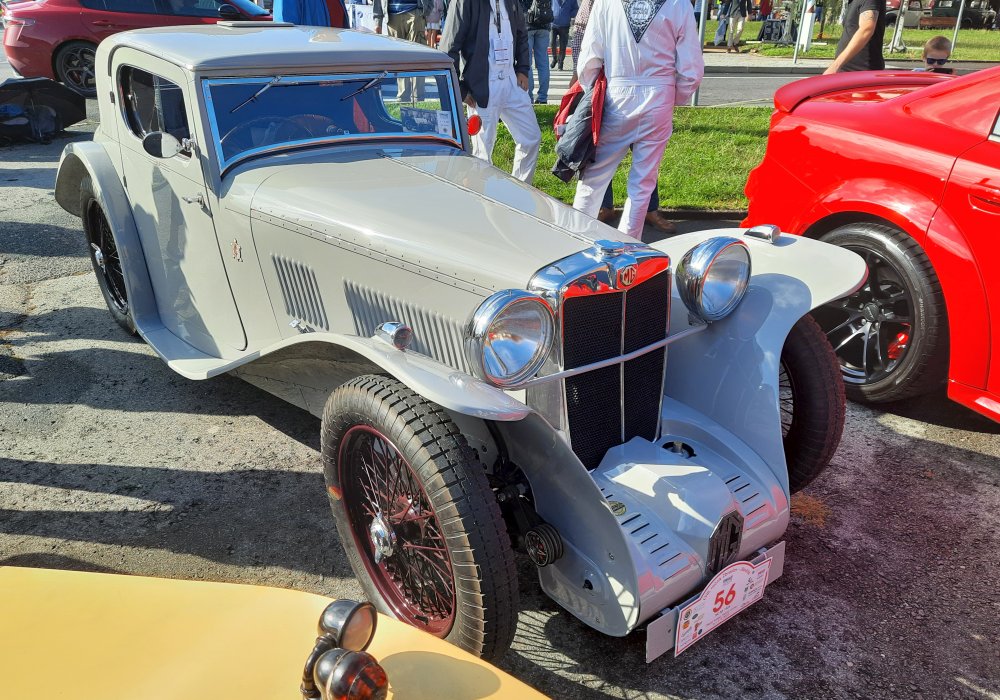
The MG NA Magnette Coupé was a rare closed-body version of MG’s N-type Magnette, introduced in 1934 as part of the company’s expanding range of six-cylinder sports cars. Combining the mechanical sophistication of the standard NA Magnette with the comfort and weather protection of enclosed coachwork, the Coupé offered a more refined alternative to the familiar open roadster and tourer models. Its elegant proportions, traditional British styling and relatively unusual body configuration made it one of the more distinctive variations of MG’s pre-war six-cylinder sports car range.
The NA Magnette was developed as the successor to the earlier K-type Magnette, incorporating improvements to the engine, chassis and overall refinement. While MG was best known for its lightweight open sports cars, the company also recognised a market for more comfortable sporting vehicles suitable for everyday use and longer journeys. Closed-body versions of the Magnette addressed this demand, combining the performance and handling characteristics of a sports car with the additional practicality of a fixed roof.
The Coupé was based on the same mechanical platform as the open NA Magnette, retaining the 1,271 cc inline six-cylinder engine with overhead camshaft and twin SU carburettors. Derived from Wolseley engineering and developed for MG applications, the engine produced approximately 56 horsepower at 5,500 rpm. Its six-cylinder configuration provided smoother power delivery than the four-cylinder engines fitted to the smaller MG Midget models, while the overhead-camshaft arrangement contributed to its responsive and relatively high-revving character.
Power was transmitted to the rear wheels through a four-speed manual gearbox. The transmission allowed the driver to make effective use of the engine’s available performance, although careful gear selection was required to maintain momentum. The additional weight of enclosed coachwork could reduce acceleration and maximum speed compared with the lighter open versions, but the Coupé remained a capable sporting vehicle by the standards of the mid-1930s.
The chassis followed the established N-type design, employing a conventional ladder-frame construction with rigid front and rear axles supported by semi-elliptic leaf springs. Friction-type shock absorbers controlled suspension movement, while mechanically operated drum brakes provided stopping power. Although the suspension arrangement was relatively simple, the chassis offered predictable handling and good stability. The combination of compact dimensions, rear-wheel drive and a responsive six-cylinder engine ensured that the Coupé retained much of the engaging driving character associated with MG sports cars.
The most distinctive feature of the NA Magnette Coupé was its enclosed bodywork. Unlike the standard open models, the Coupé incorporated a fixed roof, full-height doors and glazed side windows, providing improved protection against wind and rain. The styling retained the characteristic MG radiator grille, long bonnet, separate headlamps and flowing front wings, but the enclosed passenger compartment gave the car a more substantial and sophisticated appearance.
The roofline and rear body treatment varied according to the coachwork fitted, particularly where individual cars were completed by specialist bodybuilders. Some closed MG bodies of the period incorporated gently curved roof profiles, compact rear windows and carefully proportioned rear quarters. These features reflected contemporary developments in British coachbuilding, where traditional craftsmanship was increasingly combined with more streamlined styling.
The enclosed body also influenced the car’s practical character. Compared with the open roadster, the Coupé offered greater protection from poor weather, reduced exposure to wind and a more comfortable environment for extended journeys. The additional body structure and interior fittings increased weight, but this was an acceptable compromise for buyers seeking a sporting car with improved touring capabilities.
Inside, the NA Magnette Coupé provided a more sheltered and refined driving environment than its open counterparts. The cabin featured traditional instrumentation, including a speedometer, tachometer and gauges for monitoring essential engine functions. Leather upholstery, carefully finished interior panels and period fittings contributed to the impression of quality. The driving position remained relatively upright, with a large steering wheel and controls arranged to suit the mechanical requirements of the period.
Although the enclosed body made the Coupé less obviously competition-oriented than the open NA Magnette, its mechanical specification remained fundamentally sporting. The overhead-camshaft six-cylinder engine provided lively performance, while the relatively compact chassis offered responsive steering and predictable road behaviour. The Coupé was particularly well suited to enthusiastic road driving and longer-distance touring, where its enclosed accommodation offered a practical advantage.
The MG NA Magnette was produced between 1934 and 1935, with approximately 745 examples manufactured across the various body configurations. Closed Coupé examples were considerably less common than the open models, although precise production figures for individual coachbuilt configurations are not always clearly established. This rarity, combined with the potential differences between individual bodies, makes surviving examples particularly interesting to historians and collectors.
The introduction of the NB Magnette in 1935 brought further development of the N-type series, including revised body details and improvements to passenger accommodation. The N-type range was subsequently discontinued as MG’s model strategy changed during the latter half of the decade, making the NA part of a relatively short-lived generation of six-cylinder sports cars.
Today, the MG NA Magnette Coupé is an unusual and desirable example of pre-war British sporting coachwork. Its combination of a smooth six-cylinder engine, traditional MG engineering and enclosed body styling distinguishes it from the more familiar open Magnette models. Surviving cars are especially valued when they retain their original coachwork, mechanical components and period interior fittings.
The MG NA Magnette Coupé represents a distinctive interpretation of MG’s sporting philosophy during the 1930s. By combining the responsive performance of the N-type chassis with the comfort and elegance of a fixed-roof body, it demonstrated that a small British sports car could offer both driver involvement and touring refinement. Its rarity and historical character ensure that it remains a fascinating part of MG’s pre-war heritage.
Create image