
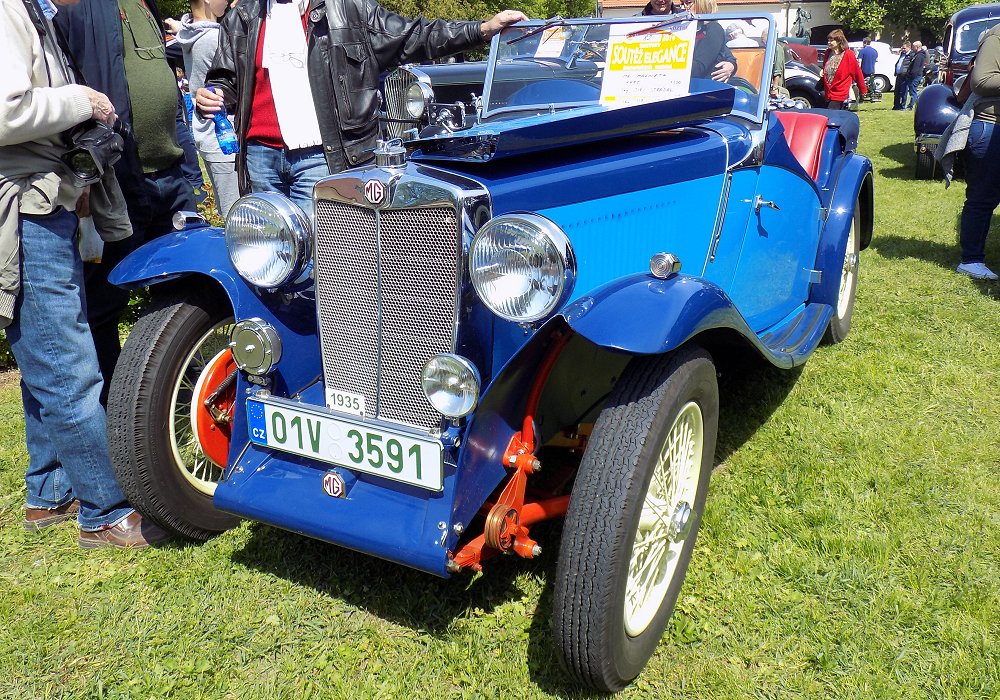
The MG NA Magnette was introduced in 1934 as part of MG’s new N-type range, representing an important development in the company’s range of six-cylinder sports cars. Designed to replace the earlier K-type Magnette, the NA combined improved mechanical refinement, attractive styling and lively performance in a compact and relatively affordable package. Positioned above the smaller MG Midget models, it offered greater comfort and flexibility while retaining the sporting characteristics that had established MG as one of Britain’s leading manufacturers of lightweight performance cars.
The NA Magnette was developed during a period of significant expansion for MG, when the company was seeking to broaden its appeal beyond small-capacity sports cars. The new N-type range incorporated lessons learned from the earlier K-type and L-type models, particularly in engine development and chassis design. The NA was intended primarily as a sporting road car rather than a dedicated competition machine, although its mechanical specification made it suitable for enthusiastic driving and participation in club motorsport.
Power came from a 1,271 cc inline six-cylinder engine featuring an overhead camshaft and twin SU carburettors. Derived from the Wolseley six-cylinder engine family, the unit was extensively developed for MG applications. Producing approximately 56 horsepower at 5,500 rpm, it provided a useful improvement in flexibility and smoothness compared with the smaller four-cylinder engines used in the Midget range. The engine’s six-cylinder configuration delivered relatively refined operation, while its overhead-camshaft design encouraged higher engine speeds and contributed to the car’s sporting character.
A four-speed manual gearbox transmitted power to the rear wheels. The transmission allowed drivers to make effective use of the engine’s power characteristics, although changing gear required greater mechanical sympathy than in modern vehicles. The NA Magnette was capable of reaching approximately 80 mph (129 km/h), depending on body style, road conditions and individual specification. This performance placed it among the more capable small six-cylinder sports cars available to British motorists during the mid-1930s.
The chassis employed a conventional ladder-frame construction, with rigid front and rear axles supported by semi-elliptic leaf springs. Friction-type shock absorbers helped control suspension movement, while mechanically operated drum brakes provided stopping power. The suspension arrangement was typical of contemporary British sports cars, combining mechanical simplicity with durability and predictable road behaviour. The NA’s relatively low weight and well-balanced proportions contributed to responsive handling, making it particularly enjoyable on winding roads.
One of the NA Magnette’s principal attractions was its range of body styles. The model was available in open two-seat and four-seat configurations, allowing buyers to choose between a more focused sports car and a practical touring machine. The two-seat roadster featured a long bonnet, upright radiator grille, separate headlamps, sweeping wings and a compact rear section. Its traditional MG appearance was enhanced by wire-spoked wheels, a folding fabric hood and detachable side screens.
The four-seat tourer offered greater practicality, with additional passenger accommodation and a longer body. It retained the characteristic MG styling but provided a more versatile alternative for owners who wished to undertake extended journeys. The larger body and additional seating made the tourer somewhat heavier than the two-seat version, although the smooth six-cylinder engine remained well suited to its touring role.
The NA Magnette was also associated with distinctive specialist coachwork, reflecting the tradition of supplying chassis to independent bodybuilders. These individually bodied cars could feature alternative seating arrangements, enclosed coachwork or revised styling details. Such variations contributed to the diversity of surviving N-type Magnettes and demonstrated the flexibility of the underlying chassis.
Inside, the NA Magnette offered a more substantial and refined environment than the smaller Midget models. The dashboard featured a comprehensive selection of instruments, including a speedometer, tachometer and gauges monitoring essential engine functions. Leather upholstery, traditional interior trim and a relatively spacious driving position contributed to the car’s appeal as a sporting tourer. Although comfort remained modest by modern standards, the NA provided an effective compromise between driver involvement and everyday usability.
The NA Magnette also benefited from MG’s considerable experience in motorsport. Earlier six-cylinder Magnettes, particularly the supercharged K3, had established an impressive competition reputation, and the N-type continued this sporting heritage. Private owners entered NA Magnettes in trials, hill climbs and club racing events, where their combination of smooth engine performance and responsive handling proved advantageous. Although the standard NA was not a purpose-built racing car, its sporting capabilities reinforced MG’s established reputation among enthusiasts.
Production of the NA Magnette continued until 1935, when it was succeeded by the NB Magnette. The later model incorporated revised bodywork and other improvements, including changes to the doors and cockpit arrangement. Approximately 745 NA Magnettes were produced, making the model relatively uncommon compared with MG’s more numerous four-cylinder sports cars.
Today, the MG NA Magnette is highly regarded among collectors of pre-war British sports cars. Its combination of six-cylinder performance, traditional MG styling and relatively limited production gives it considerable historical appeal. Surviving examples are valued for their mechanical character, elegant proportions and association with MG’s successful sporting heritage. Restoration can be demanding because of the specialised overhead-camshaft engine and the availability of certain original components, although established MG enthusiast organisations provide valuable technical knowledge and support.
The MG NA Magnette represents an important stage in the development of MG’s six-cylinder sports cars. By combining a refined overhead-camshaft engine with a lightweight chassis and a choice of attractive body styles, MG created a versatile sporting machine that appealed to both enthusiastic drivers and touring motorists. Although overshadowed in some respects by the competition achievements of the earlier K3 Magnette and the popularity of later T-type models, the NA remains a significant example of British sports car engineering during the 1930s.
Create image