
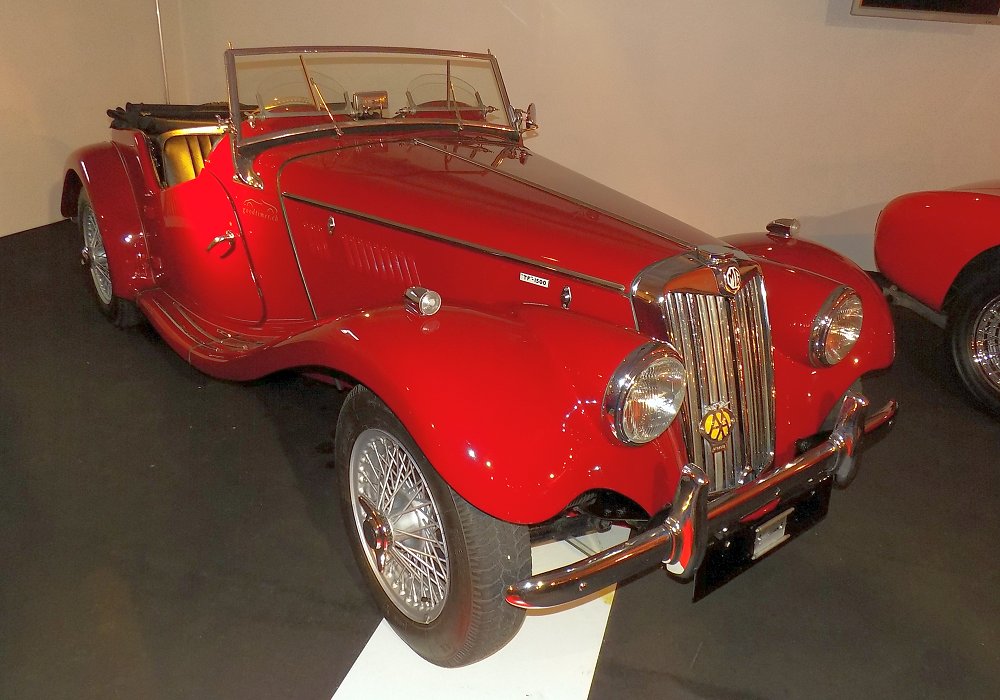
The MG TF 1500 Midget was the final and most powerful production version of MG’s traditional T-type sports car range, introduced in November 1954 as an improved development of the original MG TF. Produced at the MG factory in Abingdon, Oxfordshire, until April 1955, the TF 1500 combined the distinctive styling and established chassis engineering of its predecessor with a larger 1,466 cc engine offering improved power and torque. As the last of the classic T-type Midgets, it represented the culmination of more than two decades of MG sports car development before the introduction of the radically different MGA later in 1955.
The development of the TF 1500 took place during a period of considerable change within the British sports car industry. The original MG TF had been introduced in September 1953 as an interim replacement for the successful TD, retaining much of its predecessor’s mechanical engineering while incorporating revised body styling. Although the TF offered improved appearance and driver accommodation, its 1,250 cc engine was increasingly overshadowed by the more powerful units fitted to contemporary sports cars such as the Triumph TR2 and Austin-Healey 100.
MG recognised that the TF required additional performance to remain competitive, particularly in the important North American export market. Rather than developing a completely new engine, the company enlarged the established XPAG four-cylinder unit, creating the XPEG engine. This revised powerplant provided increased displacement and improved torque while retaining the basic construction and mechanical simplicity that had made the XPAG successful.
The TF 1500 was powered by a 1,466 cc inline four-cylinder XPEG engine, featuring overhead valves operated by pushrods and twin SU carburettors. The increase in displacement was achieved primarily through a larger cylinder bore, while the stroke remained unchanged. The engine developed approximately 63 horsepower at 5,000 rpm, compared with around 57.5 horsepower for the original 1,250 cc TF.
The increased engine capacity provided a useful improvement in torque, making the TF 1500 more flexible and responsive during everyday driving. The larger engine delivered stronger acceleration from lower engine speeds and reduced the need for frequent gear changes, particularly when climbing hills or overtaking. Although the increase in maximum horsepower was relatively modest, the additional torque made the car noticeably more enjoyable to drive.
The XPEG retained the cast-iron cylinder block and cylinder head construction of the XPAG family, together with a conventional overhead-valve arrangement. Its relatively straightforward design allowed routine maintenance and mechanical repairs to be undertaken without highly specialised equipment. The engine also retained considerable tuning potential, making it attractive to enthusiasts interested in improving performance for sporting use.
Power was transmitted to the rear wheels through a four-speed manual gearbox incorporating synchromesh on the upper three ratios. First gear remained unsynchronised, requiring careful selection when the vehicle was moving. The transmission was closely related to that used in the earlier TD and TF models, providing a direct mechanical feel and allowing the driver to make effective use of the engine’s improved torque.
The MG TF 1500 was capable of reaching approximately 85 mph (137 km/h), depending on vehicle condition and road conditions. Acceleration from 0 to 60 mph generally required around 16 to 18 seconds, representing a noticeable improvement over the original 1,250 cc model. Although still modest compared with some contemporary sports cars, the increased performance made the TF 1500 a more capable touring vehicle and improved its appeal to enthusiastic drivers.
The chassis remained essentially unchanged from the original TF, retaining the separate ladder-frame construction introduced with the MG TD. Independent front suspension employed coil springs and wishbones, while the rear axle was supported by semi-elliptic leaf springs. Hydraulic shock absorbers controlled suspension movement, and hydraulically operated drum brakes provided stopping power at all four wheels.
Rack-and-pinion steering, introduced with the TD, was retained and contributed to the TF 1500’s precise and responsive handling. The relatively wide track and compact dimensions provided predictable road behaviour, while the independent front suspension improved wheel control over uneven surfaces. Although the chassis design was becoming outdated compared with newer sports cars, it remained capable of delivering an engaging and enjoyable driving experience.
Externally, the TF 1500 was almost identical to the original 1,250 cc TF. It retained the distinctive inclined radiator grille, headlamps integrated into the front wings and lower bonnet line that distinguished the TF from the earlier TD. The long bonnet, sweeping wings, traditional running boards and rear-mounted spare wheel preserved the classic appearance of MG’s T-type sports cars.
The body was constructed using traditional MG methods, with steel panels supported by an ash timber framework and mounted on the separate chassis. The open two-seat configuration featured cut-down doors, a folding fabric hood and detachable side screens, providing basic weather protection while maintaining the traditional open-air driving experience. The windscreen could also be folded forward for sporting use.
The TF 1500 was distinguished from the earlier TF by small identification badges displaying the 1500 designation, although the overall styling remained unchanged. The revised engine was the principal difference between the two versions, and the larger capacity provided the most significant improvement in performance.
Inside, the TF 1500 retained the redesigned cockpit introduced with the original TF. The dashboard featured instruments positioned directly in front of the driver, improving visibility compared with the centrally arranged instruments of the earlier TD. The speedometer, tachometer, oil-pressure gauge and other essential controls were arranged within a traditional fascia, while leather upholstery and simple interior trim maintained the classic MG character.
The seats provided improved support and comfort compared with earlier T-type models, while the relatively upright driving position and large steering wheel reflected the car’s traditional origins. The cockpit offered limited protection from wind and weather, but the combination of compact dimensions and direct mechanical controls created an engaging driving environment.
The driving experience of the TF 1500 was characterised by improved acceleration, responsive steering and predictable handling. The additional engine torque made the car more flexible in everyday use, particularly on winding roads where frequent changes in speed were required. The independent front suspension and rack-and-pinion steering provided relatively precise control, while the traditional rear suspension and narrow tyres demanded a degree of driver involvement.
The TF 1500 was particularly well suited to touring, offering improved performance without sacrificing the mechanical simplicity and traditional character of the earlier models. Its compact dimensions and open body made it enjoyable on country roads, while the stronger engine allowed more relaxed progress on longer journeys.
The model continued to attract interest in North America, where MG had established a substantial following through the success of the TC and TD. American buyers appreciated the TF’s traditional British styling and engaging driving characteristics, although the growing popularity of more modern and powerful sports cars created increasingly strong competition.
The TF 1500 also found favour among enthusiasts involved in club motorsport. Its improved engine output and established chassis made it suitable for hill climbs, sprints and amateur competition. Owners frequently modified their cars with revised carburettors, improved exhaust systems and other performance equipment, taking advantage of the XPEG engine’s tuning potential.
Production of the MG TF 1500 continued until April 1955, when the T-type range was discontinued in preparation for the introduction of the MGA. Approximately 6,200 TF 1500 models were manufactured, representing the majority of the 9,602 TF cars produced overall. The relatively short production period reflected the transitional nature of the TF, which had been developed to maintain MG’s position in the sports car market while a completely new model was being prepared.
The introduction of the MGA in 1955 marked a decisive change in MG’s design philosophy. Its streamlined body, lower seating position and more modern mechanical engineering represented a substantial departure from the traditional T-type formula. The TF 1500 therefore became the final production MG sports car to feature the classic upright radiator arrangement, separate chassis and pre-war-inspired body construction that had characterised the marque’s Midget models for more than two decades.
Today, the MG TF 1500 Midget is regarded as one of the most desirable members of the T-type family. Its distinctive styling, improved performance and historical significance make it particularly attractive to collectors seeking a traditional British roadster with greater usability than the earlier models. The additional torque of the XPEG engine is especially appreciated by owners who regularly drive their cars on modern roads.
Restoration requires careful attention to the separate chassis, ash-framed body structure, steel panels and mechanical components. Corrosion, deterioration of the timber framework and previous repairs can affect the structural integrity of the body, while the condition of the XPEG engine and gearbox should be assessed carefully. Originality, documented history and the quality of restoration work are important considerations when evaluating surviving examples.
The MG TF 1500 Midget represents the final development of MG’s traditional T-type sports car range. By combining the established chassis and distinctive styling of the TF with a larger and more flexible engine, MG created a more capable and refined version of its classic roadster. Although soon replaced by the more modern MGA, the TF 1500 remains an important and highly regarded model in MG history, marking the conclusion of an era that had helped establish the company as one of Britain’s most celebrated sports car manufacturers.