
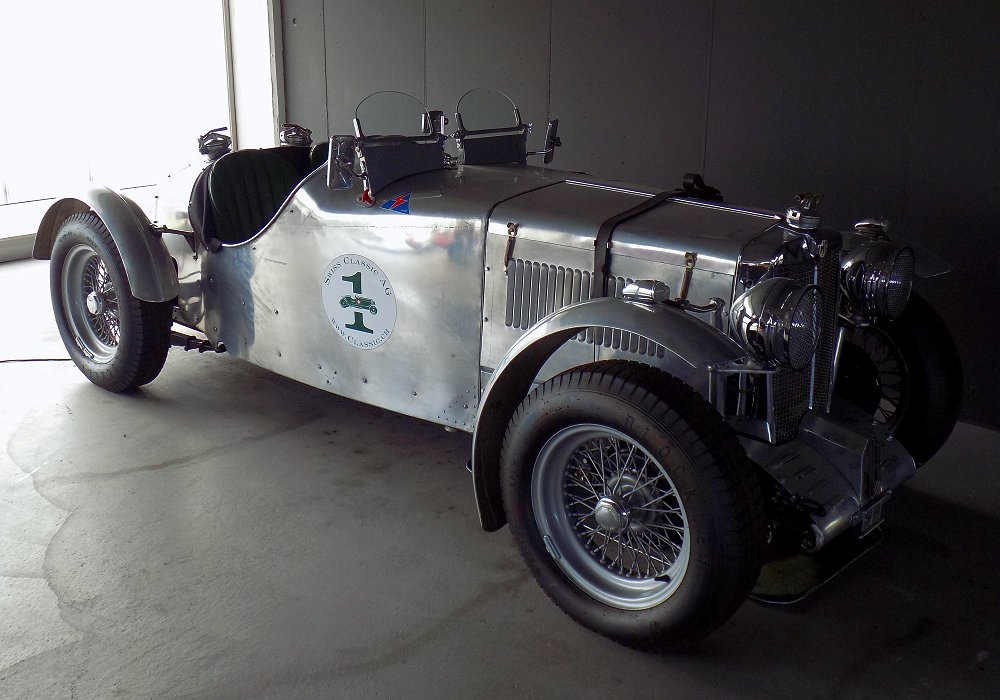
The MG TA Special was a competition-oriented interpretation of the MG TA Midget, developed through modifications undertaken by private owners, specialist workshops and motorsport enthusiasts. Based on the TA introduced in 1936, these individually prepared cars combined the established mechanical foundations of MG’s early T-type sports cars with improvements intended to increase performance, reduce weight and enhance handling. Unlike the standard TA Midget, the TA Special was not a single factory-produced model with a uniform specification, but rather a designation applied to a variety of modified vehicles built for road use, racing, hill climbs and other sporting activities.
The MG TA Midget was introduced as the successor to the PB Midget and marked the beginning of the successful T-type series. With its larger engine, improved chassis and more spacious bodywork, the TA offered an attractive combination of affordability and sporting performance. Although primarily designed as a road-going sports car, its relatively straightforward mechanical construction made it an appealing platform for enthusiasts seeking greater performance. During the late 1930s and subsequent decades, numerous TA chassis were modified to suit individual requirements, giving rise to a wide variety of special-bodied and competition-prepared examples.
The standard TA was powered by a 1,292 cc inline four-cylinder engine derived from the Morris Ten. Featuring overhead valves operated by pushrods and twin SU carburettors, the engine produced approximately 50 horsepower at 4,500 rpm. While less sophisticated than the overhead-camshaft engines used in earlier MG Midgets, the unit offered useful torque and relatively simple maintenance. Its conventional design also made it suitable for modification, with owners experimenting with improvements to carburation, ignition, compression ratios and exhaust systems.
Engine specifications varied considerably between individual TA Specials. Some retained the original 1,292 cc engine with relatively modest tuning modifications, while others incorporated more extensive changes intended to increase power and reliability. Superchargers were occasionally fitted to provide additional performance, drawing upon MG’s established experience with forced induction in pre-war competition cars. Other examples received replacement engines, including units from later MG models, particularly when cars were rebuilt for competition after the Second World War.
Power was normally transmitted to the rear wheels through a four-speed manual gearbox, although individual specials could feature alternative transmissions or modified gear ratios. The standard TA gearbox incorporated synchromesh on the upper three ratios, providing relatively convenient operation for a sports car of the period. Competition-prepared vehicles sometimes received revised gearing to improve acceleration or suit particular racing circuits and hill-climb courses.
The chassis retained the basic ladder-frame construction of the standard TA, with rigid front and rear axles supported by semi-elliptic leaf springs. Hydraulic shock absorbers controlled suspension movement, while hydraulically operated drum brakes provided stopping power. These components offered a practical starting point for competition development, although many specials incorporated changes to spring rates, shock absorber settings and steering geometry to improve handling.
Weight reduction was a particularly important consideration in the construction of many TA Specials. The standard roadster body, with its steel panels, wooden framework and associated fittings, could be replaced by a lighter structure designed specifically for sporting use. Aluminium body panels were frequently employed in competition specials because they offered a useful reduction in weight while allowing individual builders considerable freedom in shaping the bodywork.
As a result, the appearance of TA Specials varied widely. Some retained the traditional MG radiator grille, long bonnet and sweeping wings of the original roadster, while others adopted lower, narrower and more streamlined bodies. Competition-oriented examples might feature abbreviated wings, small racing windscreens, exposed wheels and simplified rear bodywork. These modifications gave individual cars a purposeful appearance that reflected their intended use rather than the styling conventions of standard production vehicles.
The construction of special-bodied MGs became particularly popular in Britain during the years following the Second World War. Motorsport enthusiasts often acquired older sports cars and modified them for participation in club racing, trials and hill climbs. The MG TA provided a suitable basis for such projects because of its strong chassis, accessible mechanical components and established sporting reputation. Some cars were rebuilt repeatedly during their competition careers, resulting in vehicles that differed substantially from their original factory specification.
The interiors of TA Specials were generally functional and designed around the requirements of the driver. Competition examples often dispensed with unnecessary trim, passenger accommodation and weather equipment to reduce weight. Lightweight seats, simplified dashboards and additional instruments could be fitted to improve the driving environment. The large steering wheel and mechanical controls of the original TA were frequently retained, although their arrangement sometimes changed to accommodate revised bodywork or racing equipment.
Performance depended heavily on the specification of the individual vehicle. A lightly modified TA Special might offer only a modest improvement over the standard roadster, which was capable of approximately 78 mph (126 km/h). More extensively developed cars, particularly those incorporating lightweight bodies, tuned engines or superchargers, could achieve substantially stronger acceleration and higher maximum speeds. However, because no standard specification existed, performance figures must be considered individually rather than applied to all TA Specials.
The MG TA Special was particularly well suited to the British tradition of amateur motorsport. Trials, hill climbs, sprints and club racing provided opportunities for enthusiasts to compete with relatively inexpensive machinery. The TA’s conventional mechanical layout allowed owners to undertake much of the preparation and maintenance themselves, while the availability of MG components encouraged experimentation and further development.
Some TA Specials were constructed primarily for road use, combining individual styling with improved performance or comfort. Others were purpose-built competition machines, often incorporating extensive alterations to the original chassis and mechanical components. This diversity makes the TA Special an interesting category within MG history, reflecting the creativity and engineering skills of individual builders rather than the development programme of the factory.
Production of the standard MG TA Midget continued from 1936 until 1939, with approximately 3,003 examples manufactured. The model was replaced by the MG TB Midget, which introduced the 1,250 cc XPAG engine. Because TA Specials were generally created through independent modifications rather than factory production, there is no definitive production total for these vehicles. Individual examples may have been constructed during the pre-war period, immediately after the war or many years later.
Today, MG TA Specials are valued for their individuality, sporting character and connection with Britain’s historic motorsport culture. Cars with documented competition histories, period modifications or recognised specialist coachwork can be particularly desirable. Originality is often assessed differently from that of a standard production MG, with greater emphasis placed on the authenticity of the special’s construction, its historical development and the preservation of significant modifications.
Restoration and maintenance can present particular challenges because individual specials frequently incorporate components from different vehicles or one-off fabricated parts. Accurate identification of the chassis, engine and bodywork is important, especially where a car has undergone several modifications during its lifetime. Nevertheless, the straightforward engineering of the original TA provides a sound basis for continued use and enjoyment.
The MG TA Special represents an important aspect of British sports car culture during the 1930s and the post-war period. By adapting the established TA chassis to suit individual sporting ambitions, enthusiasts created a diverse range of vehicles that extended the useful life and competition potential of MG’s early T-type design. Although the name does not identify a single standardised model, it encompasses some of the most individual and historically interesting interpretations of the pre-war MG Midget, celebrating the ingenuity, enthusiasm and mechanical creativity that have long been associated with the MG marque.
Create image