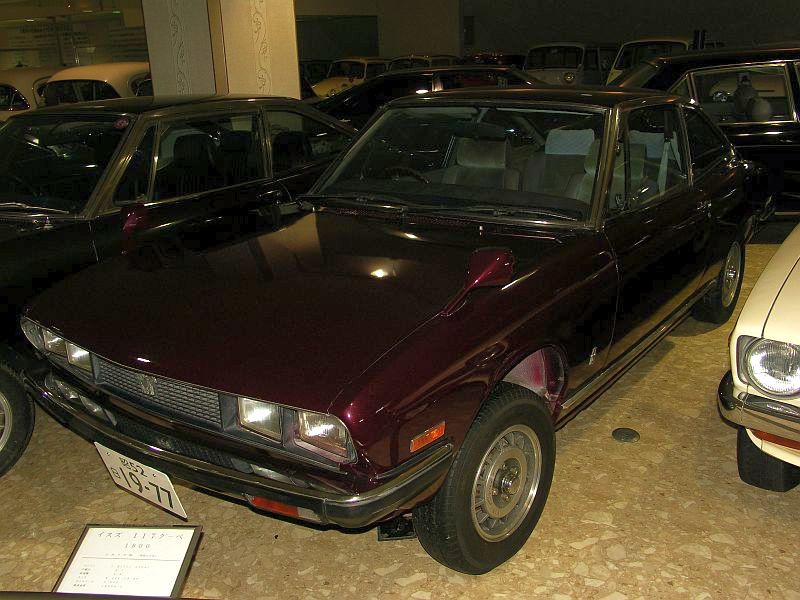
Isuzu 117 Coupé XE 1800
The Isuzu 117 Coupé XE 1800 was a late and particularly refined version of one of Japan’s most elegant and enduring automobiles. Introduced in 1976, the XE represented the high-specification trim of the 1800-series cars, combining the purity of Giorgetto Giugiaro’s original 117 design with a level of luxury and modernity that reflected the changing tastes of Japan’s middle and upper classes in the late 1970s. It stood at a crossroads between the hand-built exclusivity of the early 117 Coupés and the more automated, technologically advanced cars that followed, offering the best blend of performance, craftsmanship, and contemporary comfort that Isuzu could produce.
By the time the 117 Coupé XE 1800 appeared, the model had already earned a reputation as Japan’s most sophisticated grand touring coupé. The original 1.6-litre version had been hand-built in small numbers for elite customers, but as the 1970s progressed, Isuzu expanded production to meet wider demand. The XE trim was introduced as a way to preserve the car’s luxurious image amid this transition. It maintained the graceful proportions and minimalist beauty of Giugiaro’s design while adding a richer interior and subtle cosmetic enhancements that reflected the growing emphasis on refinement and convenience.
Externally, the 117 Coupé XE 1800 retained the timeless silhouette that had made the car famous — a long bonnet, low beltline, slender roof pillars, and a gently sloping rear deck that together gave the body its signature balance and poise. The clean lines remained largely untouched, but small updates distinguished the XE from earlier versions. The front grille was refined with a finer mesh and a more prominent Isuzu badge, while the bumpers were slightly deeper to meet newer safety regulations yet remained slim and elegant. Discreet chrome trim ran along the flanks and window frames, and new wheel designs with polished hubcaps completed the understated luxury of the presentation.
The heart of the car was Isuzu’s G180 twin-cam engine, a 1,817 cc inline-four with twin overhead camshafts and a crossflow head, part of the company’s highly regarded G-series family. In the XE trim, the engine was tuned for smoothness and flexibility rather than outright performance, developing approximately 115 horsepower and a healthy 15 kg-m of torque. Power delivery was progressive and linear, with strong mid-range response that made the car ideally suited for relaxed, high-speed touring. The engine was paired with either a five-speed manual gearbox or an optional three-speed automatic transmission — a reflection of the growing demand for effortless motoring among Japan’s luxury coupé buyers in the late 1970s.
Mechanically, the 117 Coupé XE 1800 retained the proven suspension configuration that had defined the model since its debut: independent double wishbones with coil springs at the front and a live rear axle located by trailing arms and coils at the rear. While this layout was no longer cutting-edge, it provided a fine compromise between comfort and control. The ride was supple and composed, and the car’s long wheelbase ensured stability on fast roads. The XE benefited from refinements to the suspension bushings, improved damping, and power-assisted steering, making it quieter and more comfortable than earlier models. Braking was by ventilated discs at the front and drums at the rear, with a dual-circuit system that provided progressive and reassuring stopping power.
The interior of the 117 Coupé XE 1800 was its most distinctive feature. Isuzu placed great emphasis on craftsmanship and comfort, and the XE specification represented the pinnacle of this philosophy. The cabin was trimmed in high-quality materials, with richly patterned cloth or optional leather upholstery, deep carpeting, and genuine wood veneer across the dashboard and door panels. The instrument cluster was redesigned with clear, modern dials and improved night illumination, while a new centre console housed upgraded climate controls and an integrated radio system. Air conditioning was standard on most XE models, reflecting the car’s upmarket positioning. The seating was redesigned for improved comfort, with additional padding and adjustable headrests, while the rear seats offered a surprising degree of space for a compact coupé. Every detail — from the feel of the switches to the sound of the closing doors — reflected Isuzu’s commitment to precision and quality.
On the road, the 117 Coupé XE 1800 delivered a driving experience that emphasized refinement and composure. The twin-cam engine remained one of the smoothest and most flexible four-cylinder units of its time, providing effortless acceleration and quiet cruising. The five-speed gearbox shifted with precision, and the power steering gave the car a light, fluid feel around town while remaining stable on the highway. The 117’s chassis balance and suspension tuning made it ideally suited to Japan’s winding mountain roads as well as long-distance touring. Although not a pure sports car, it rewarded smooth, measured driving with an unmistakable sense of harmony — the mark of a mature and well-resolved design.
The XE 1800 also reflected broader cultural and economic changes in Japan. By the mid-1970s, the nation’s prosperity was growing rapidly, and buyers expected more from their automobiles than mechanical reliability. They sought refinement, comfort, and status — qualities that the 117 embodied perfectly. The XE trim in particular appealed to professionals and executives who wanted a car that expressed good taste rather than extravagance. Its quiet confidence and design purity made it a symbol of cultivated modernity.
Production of the 117 Coupé XE 1800 continued until the late 1970s, when the range evolved into the larger and more powerful 2000-series models. Despite these later developments, many enthusiasts regard the 1800 XE as one of the purest expressions of the 117’s character — still faithful to Giugiaro’s original design, but refined by years of careful improvement. It represented the point at which the 117 matured into a true grand tourer: elegant, comfortable, and technically sophisticated.
Today, the Isuzu 117 Coupé XE 1800 is recognized as a classic of understated Japanese design. Collectors admire it not only for its beauty but also for its exceptional build quality and enduring mechanical integrity. Its timeless proportions, quiet performance, and attention to detail make it one of the most satisfying Japanese coupés to own and drive from the era.
The 117 Coupé XE 1800 stands as a testament to Isuzu’s ability to blend artistry and engineering — a car of grace, balance, and refinement. It was not about excess or spectacle, but about the enduring appeal of thoughtful design and craftsmanship. Even decades later, it remains one of the most poised and beautifully executed coupés ever built in Japan, a machine that continues to embody the quiet confidence of its maker.
