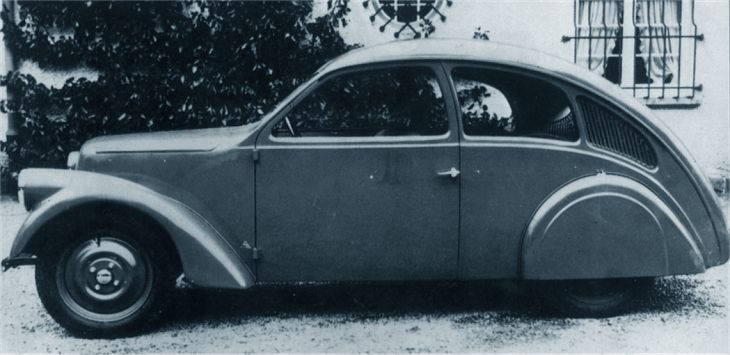
The Volkswagen NSU Typ 32 was a pre-production prototype developed in 1933 as a collaboration between engineer Ferdinand Porsche and NSU, a German motorcycle and automobile manufacturer. The Typ 32 was another important step toward realizing the vision of a “people’s car” (Volkswagen), intended to be affordable, practical, and reliable for the average German family. It served as a direct predecessor to the Volkswagen Beetle, incorporating several key design features that would later define the iconic model.
The Typ 32 featured a compact, streamlined design and was powered by a rear-mounted, 1.5-liter air-cooled flat-four engine, producing approximately 25 horsepower. This engine layout was a key feature in Porsche’s vision of an affordable and easy-to-maintain vehicle, and it would become a hallmark of the later Beetle. The Typ 32’s rear-engine setup contributed to efficient space utilization, creating a roomy interior despite the car’s small size. The engine powered the rear wheels through a simple manual transmission, providing reliable performance for the modest power output.
The Typ 32 was equipped with a torsion-bar suspension, an innovation that offered a smoother ride compared to other cars of the time. This independent suspension design also made the car easy to handle, which was essential for everyday drivers. The body design was aerodynamic and round, resembling the shape that would later be refined into the Beetle’s iconic silhouette.
Although the Typ 32 did not go into mass production, it heavily influenced the design of the Volkswagen Type 1 (Beetle), especially in terms of layout, engine placement, and overall form. NSU ultimately left the project due to financial constraints, but the prototype work and insights gained by Porsche were invaluable. Porsche continued refining the design in subsequent prototypes, leading to the Volkswagen Beetle’s launch in 1938.
Today, the Volkswagen NSU Typ 32 is recognized as a significant piece of automotive history. Only a few prototypes were made, and they are considered rare artifacts that illustrate the early stages of developing one of the world’s most recognizable cars. The Typ 32 represents an important milestone in the journey toward creating the first mass-produced Volkswagen.