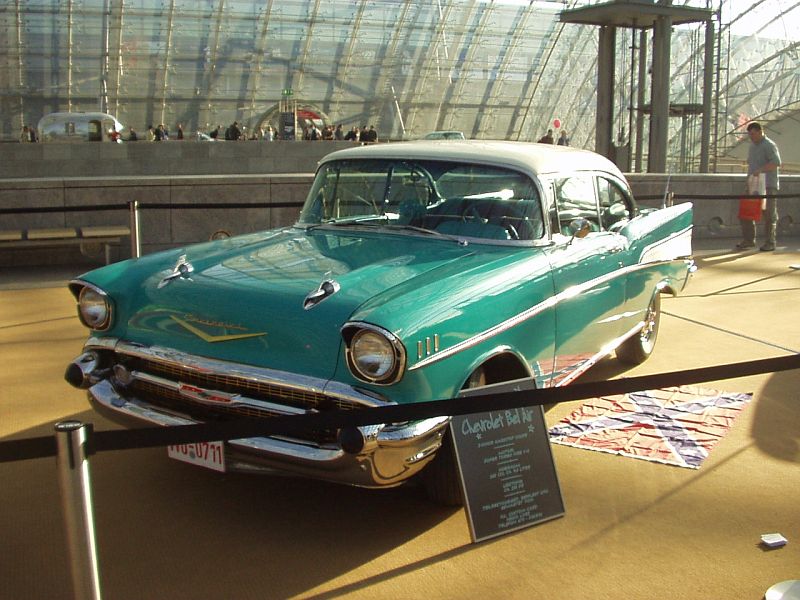
Chevrolet Bel Air Hardtop
The Chevrolet Bel Air Hardtop was a standout model in Chevrolet’s golden era of the 1950s and early 1960s, representing the epitome of mid-century American automotive design and innovation. Introduced as part of the Bel Air series, the hardtop body style played a crucial role in defining the image of postwar optimism—sleek, stylish, and brimming with chrome-laden confidence. It combined the practicality of a sedan with the flair of a convertible, minus the folding roof, offering buyers the best of both worlds.
The hallmark feature of the hardtop was the absence of a B-pillar between the front and rear side windows. When the windows were rolled down, the car presented an open, uninterrupted look that closely resembled a convertible. This design gave the Bel Air Hardtop a sportier, more upscale aesthetic compared to traditional sedans. The sweeping lines, distinctive rear fins (particularly in the late 1950s models), and wraparound windshields all contributed to its head-turning appeal. Chrome trim was generously applied, especially around the grille, side panels, and tail lights, reflecting the era’s fascination with futuristic styling and airplane-inspired motifs.
Inside, the Bel Air Hardtop was equally impressive. The interiors featured two-tone upholstery, elaborate dashboard designs, and plenty of bright metal accents. Comfort was a priority, and many models came equipped with padded dash tops, deluxe steering wheels, and optional amenities such as power windows, air conditioning, and even automatic headlight dimmers. The cabin was spacious and airy, further emphasized by the unobstructed side window layout.
Under the hood, the Bel Air Hardtop was available with a range of engines that evolved over its production years. Early models came with Chevrolet’s reliable inline-six-cylinder engines, but as the demand for more power grew, V8 options quickly became available. By the mid to late ’50s, engines like the 265 and 283 cubic inch small-block V8s were popular choices, offering improved performance and responsiveness. These engines were often paired with a three-speed manual, overdrive, or the increasingly popular Powerglide automatic transmission.
The driving experience of the Bel Air Hardtop combined smooth handling with solid road manners. It was designed for cruising—whether down Main Street or on the open highway. The suspension setup, while soft by today’s standards, provided a comfortable ride that absorbed bumps well. Steering was relatively light, especially with power assist, and braking was handled by drum brakes all around. The car’s balance of size, power, and comfort made it a favored choice among a wide range of drivers.
Throughout the years, the Bel Air Hardtop became a cultural icon, appearing in movies, television shows, and songs. It symbolized American prosperity, freedom, and a growing fascination with personal expression through automobiles. The 1957 Bel Air Hardtop, with its prominent tailfins and gold anodized trim, is perhaps the most iconic and collectible of them all, though earlier and later models also have strong followings.
Today, the Chevrolet Bel Air Hardtop is a cherished classic, sought after by collectors and enthusiasts for its historical significance, design excellence, and nostalgic charm. Restored examples often appear at car shows and auctions, while modified versions continue the hot rod tradition. Whether preserved in original condition or customized for performance, the Bel Air Hardtop remains a shining example of Chevrolet’s impact on the golden age of American motoring.
